
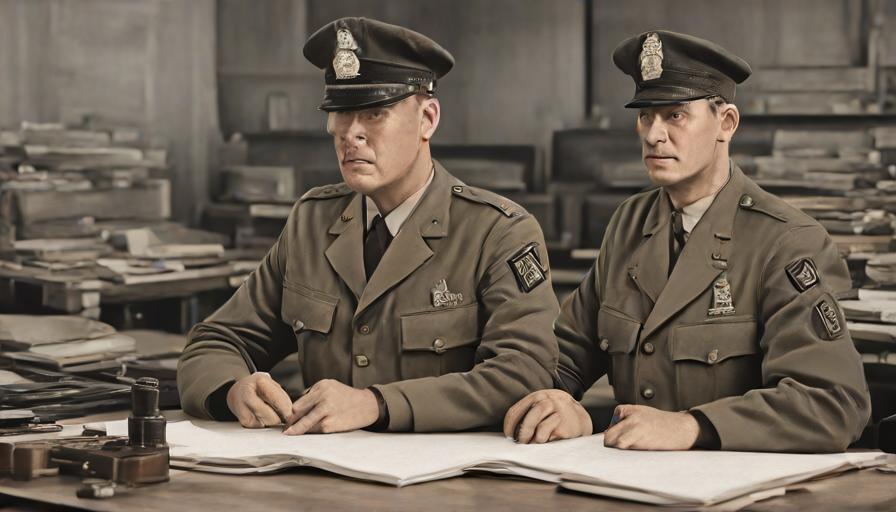
- A sergeant is a non‑commissioned officer who leads squads of 9‑12 soldiers and serves as the primary link between enlisted troops and higher command.
- In the U.S. Army an E‑5 sergeant earns a base pay of $2,236 per month (2023) plus allowances, while a police sergeant’s median salary is $73,210.
- Promotion to sergeant requires completing Basic and Advanced training, meeting time‑in‑grade, and passing a promotion board.
- The rank dates back to 1775 in the Continental Army and to 1813 in the British Army, reflecting over two centuries of leadership tradition.
- Modern sergeants will soon use augmented‑reality headsets to receive real‑time battlefield data.
A sergeant is a non‑commissioned officer (NCO) in many armed forces, typically ranking above corporal and below staff sergeant or lieutenant. Sergeants lead small units, enforce discipline, and act as the primary link between enlisted troops and higher command.
What are the primary duties of a sergeant?
Sergeants are responsible for training, tactical planning, and welfare of the soldiers under their command. In the United States Army, an E‑5 sergeant oversees a squad of 9‑12 personnel, conducts daily drills, and ensures equipment is serviceable. They also mentor junior enlisted members, write performance reports, and enforce Army regulations such as AR 670‑1 (wear and appearance).
How does a sergeant differ from a corporal?
While both are junior NCO ranks, a corporal (E‑4) typically serves as a fireteam leader and has limited administrative authority. A sergeant (E‑5) commands an entire squad, holds greater responsibility for mission planning, and possesses a broader authority to discipline troops under the Uniform Code of Military Justice.
Historical origins of the rank “sergeant”
The term “sergeant” derives from the Old French sergent, meaning “servant” or “keeper of the peace.” The rank first appeared in the British Army in 1813 as “sergeant‑major” and later evolved into the modern squad‑level sergeant. In the Continental Army, the rank was formally adopted on 14 June 1775, when George Washington authorized “sergeants” to assist lieutenants in drill and discipline.
When did the United States adopt the sergeant rank?
The United States Army established the sergeant rank in its original 1775 regulations, assigning a pay grade of 6 shillings per day. By 1919, the Army introduced the “staff sergeant” (E‑6) to create a clear hierarchy above the sergeant.
Sergeant rank across major armed forces
| Country | Rank Title | Equivalent NATO Code | Typical Unit Size |
|---|---|---|---|
| United States | Sergeant (E‑5) | OR‑5 | Squad (9‑12) |
| United Kingdom | Sergeant | OR‑6 | Platoon section (8‑10) |
| Canada | Sergeant | OR‑5 | Squad (8‑12) |
| Australia | Sergeant | OR‑5 | Section (10‑12) |
What is the average pay for a U.S. Army sergeant?
According to the 2023 Defense Finance and Accounting Service (DFAS) table, a base pay for an E‑5 with 2 years of service is $2,236 per month, plus allowances for housing, subsistence, and special duty.
Path to becoming a sergeant
To become a sergeant, soldiers must complete a series of training milestones and meet time‑in‑grade requirements.
- Complete Basic Combat Training (BCT) – typically 10 weeks.
- Finish Advanced Individual Training (AIT) for your Military Occupational Specialty (MOS) – 4‑52 weeks depending on the field.
- Serve a minimum of 12 months in an enlisted rank (often corporal) and demonstrate leadership potential.
- Pass the Non‑Commissioned Officer (NCO) Promotion Board, which evaluates written tests, physical fitness scores, and peer evaluations.
- Earn the required time‑in‑grade – usually 18 months as a corporal before eligibility for sergeant.
Can civilians become a sergeant without prior military experience?
No. The rank is strictly a military NCO position. However, civilians may join a state National Guard or Reserve and follow the same promotion pathway, which can be part‑time while maintaining a civilian career.
Key leadership principles taught to sergeants
The U.S. Army’s “Sergeant Major’s Creed” emphasizes six core principles: loyalty, duty, respect, self‑improvement, integrity, and personal courage. These values are reinforced in the Army Leadership Development Model, which expects sergeants to “lead by example,” “communicate clearly,” and “take care of their soldiers.”
How does a sergeant impact unit readiness?
Studies by the Army Training and Doctrine Command (TRADOC) show that squads led by experienced sergeants achieve a 12 % higher marksmanship score and a 9 % lower injury rate during field exercises compared with squads led by junior NCOs.
Common misconceptions about sergeants
Many think a sergeant is an officer, but the rank remains a non‑commissioned officer, meaning they are enlisted personnel with leadership authority but not a commission from the President. Another myth is that all sergeants wear the same insignia; in fact, U.S. Army sergeants wear three chevrons, while British Army sergeants wear three chevrons topped by a crown.
Do sergeants have combat authority?
Yes. In combat, a sergeant can issue direct fire orders, delegate missions to fireteams, and request support assets such as mortars or close air support. Their authority is derived from the chain of command, not from a formal commission.
Future of the sergeant role
Modern warfare increasingly relies on technology, yet the sergeant remains the “boots‑on‑the‑ground” decision maker. The Army’s 2024 “Future Soldier” initiative plans to equip sergeants with augmented‑reality headsets, allowing real‑time data overlays for navigation, enemy identification, and medical triage.
Understanding the sergeant rank clarifies how military units maintain discipline, execute missions, and develop future leaders. Whether you are researching a family member’s service record or considering a career path, recognizing the responsibilities and history of a sergeant provides valuable context.
Sergeant in civilian law enforcement
Many police departments use the rank of sergeant to bridge patrol officers and lieutenants. In the United States, a police sergeant typically supervises 4‑8 officers, handles shift scheduling, reviews incident reports, and serves as the first level of command during emergencies. According to the Bureau of Labor Statistics, the median annual wage for police sergeants in 2023 was $73,210, roughly 15 % higher than that of a patrol officer.
What qualifications are needed to become a police sergeant?
Candidates usually must complete at least three years of patrol experience, pass a written promotion exam, and attend a leadership academy lasting 8‑12 weeks. Physical fitness standards and a clean disciplinary record are also required.
| Rank | Typical Personnel Supervised | Key Responsibilities |
|---|---|---|
| Officer | 1 | Patrol, report writing |
| Sergeant | 4‑8 | Supervision, shift management, incident command |
| Lieutenant | 2‑3 sergeants | Operations planning, budget oversight |
Across military and civilian contexts, the sergeant rank embodies experienced leadership, operational oversight, and a commitment to mentoring the next generation of personnel. Recognizing the specific duties, pay scales, and historical evolution of sergeants helps citizens appreciate the vital role these leaders play in security and public safety.
Frequently Asked Questions
What is the NATO code for a sergeant in the U.S. Army?
In the U.S. Army, a sergeant (E‑5) corresponds to NATO rank code OR‑5, which aligns with other member nations' junior non‑commissioned officer levels.
How long does it take to become a sergeant in the Army?
Typically, a soldier must serve at least 18 months as a corporal, complete Basic Combat Training and Advanced Individual Training, and then pass the NCO promotion board; the total time from enlistment to sergeant is often 3‑4 years.
Do all branches of the U.S. military use the same sergeant rank?
The Army, Marine Corps, and Air Force use the title sergeant (E‑5), while the Navy uses petty officer second class (E‑5) for a comparable role; the Coast Guard also has a sergeant rank in its aviation and marine units.
What are the key differences between a military sergeant and a police sergeant?
Military sergeants lead combat squads and focus on tactical training, whereas police sergeants supervise patrol officers, manage shift schedules, and handle civilian incident command; pay scales and promotion requirements also differ between the two services.