Why Festive Gold Buyers Are Looking Beyond Daily Retail Price Spreads
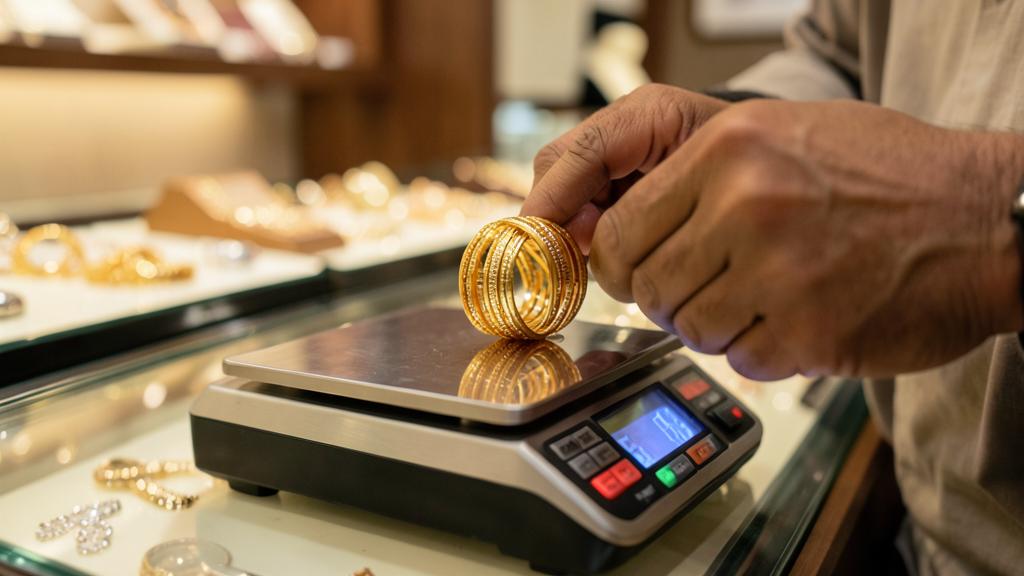
The real test for retail bullion buyers ahead of Dhanteras and Diwali isn’t whether spot prices bounce back, but how heavily regional pricing models alter the daily Tanishq gold rate compared to wholesale benchmarks. While domestic gold futures on the Multi Commodity Exchange (MCX) slid 0.86% to ₹1,38,979 per 10 grams and international spot prices slipped toward $3,900 an ounce, physical stores saw brisk footfalls as the yellow metal hovered near ₹1.39 lakh per 10 grams on November 3.
- Gold futures on the MCX fell 0.86% to ₹1,38,979 per 10 grams, while retail gold hovered near ₹1.39 lakh.
- Gold remains approximately 21% below its peak record set in January 2026, with international spot prices near $3,900 an ounce.
- Major jewellers like Tanishq, Malabar Gold, Joyalukkas, and Kalyan Jewellers maintain varying retail board rates for 22K, 24K, 20K, and 18K jewellery relative to IBJA benchmarks.
Even with gold sitting roughly 21% below its peak record set in January, tracking the live Tanishq gold rate reveals how major retail chains calibrate their 24K, 22K, 20K, and 18K quotes against standard benchmarks published by the Indian Bullion and Jewellers Association (IBJA). On November 2, prices staged a rebound across major metro markets including Delhi, Mumbai, Hyderabad, Bengaluru, and Chennai, after sharp downward adjustments recorded on October 30 and October 31.
Market corrections expose wide spreads across retail counters
Data across late October and early November shows clear divergence among India’s top bullion retailers. While IBJA sets baseline national benchmark rates, major corporate chains—including Tanishq, Malabar Gold & Diamonds, Joyalukkas, and Kalyan Jewellers—maintain distinct retail pricing boards. Silver futures experienced a steeper drop on the MCX, falling 2.09% to around ₹1,79,940 per kg, while retail silver settled near ₹1.80 lakh.
Direct rate comparisons published by Mint and The Economic Times showed Malabar Gold, Joyalukkas, and Tanishq operating with slight price variations per gram for 22K and 24K inventory. These daily board adjustments reflect localized freight, store overheads, making charges, and city-specific demand variations rather than pure commodity price tracking. Fluctuations were evident as early as September 25, when gold prices recorded a temporary recovery following a steep single-day decline.
Regional price wars fail to undercut brand loyalty
Skeptics argue that higher listed board rates put premium networks at a disadvantage against competitors who aggressively advertise lower base quotes per gram. When gold dropped sharply in late October before turning around on November 2 ahead of Dhanteras, discount-minded shoppers naturally evaluated chains offering lower initial rates on 22K jewellery.
Yet that initial price differential does not determine total sales volume. Standard retail figures across Kolkata, Mumbai, and Delhi show that while value-focused brands rely on tight retail spreads, consumer retention depends heavily on direct marketing and store-level engagement. Tanishq hosted a Mega Customer Meet with over 100 patrons ahead of the festive season, using direct consultations to lock in orders ahead of the Dhanteras rush rather than relying solely on morning price cuts.
Exchange programs buffer margins when spot prices slide
As retail metal prices continue to fluctuate around the ₹1.39 lakh mark, consumer behavior has shifted heavily toward recycling existing holdings. The effective Tanishq gold rate per gram becomes less of an obstacle for buyers who utilize gold exchange schemes to trade unused bangles, single earrings, or older wedding necklaces for hallmarked festive designs.
This exchange strategy provides jewellers with an insulated supply of precious metal, converting un-worn family jewellery into fresh sales while protecting store footfalls against broader macroeconomic drops. With silver sitting at ₹1.80 lakh per kg and gold remaining 21% below its January record, the festive shopping season is being shaped by structural trade-ins as much as daily board rates.
Sources
- Gold rate today (November 2, 2026): Check 24k, 22k, 20k and 18k gold jewellery prices from Malabar Gold & — The Economic Times
- Malabar Gold rates October 2026: 22K, 24K gold compared with Tanishq, Joyalukkas; Which jeweller offers the best prices? — Livemint
- Tanishq Hosts Mega Customer Meet with Over 100 Customers Ahead of the Festive Season — ANDAMAN SHEEKHA
- Gold, silver rates today, November 2: Prices rebound ahead of Dhanteras and Diwali; Check gold rates in Chennai, Bengaluru, Hyderabad — Upstox
- Gold and silver rate today (October 31, 2026): Check 24k, 22k, 20k and 18k gold jewellery prices from IBJA — The Economic Times
About The Author