- Aadhaar is a 12‑digit biometric ID covering over 1.34 billion Indian residents.
- Aadhaar enables Direct Benefit Transfer, cutting welfare fraud by roughly 30 %.
- The Virtual ID (VID) allows authentication without exposing the actual Aadhaar number.
Aadhaar (often spelled adhar) is a 12‑digit unique identification number issued by the Indian government to residents. It links biometric and demographic data to a single ID, enabling access to subsidies, banking, and digital services.
What is Aadhaar and why is it important?
Aadhaar, officially called the Unique Identification Number (UID), is a 12‑digit random number that the Unique Identification Authority of India (UIDAI) assigns to every resident of India. Introduced on 29 September 2010, it has become the world’s largest biometric database, covering over 1.34 billion people as of December 2023.
How does the Aadhaar enrolment process work?
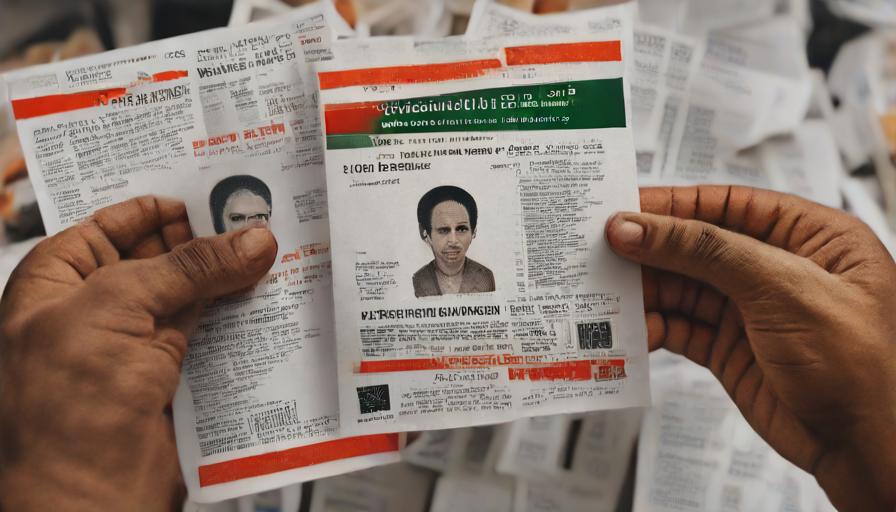
Applicants visit an authorised enrolment centre, present proof of identity and address, and provide biometric data (iris scan, fingerprint, and photograph). The data are encrypted and stored in the Central Identities Data Repository (CIDR). Within a few weeks, the resident receives an Aadhaar card containing the 12‑digit number and QR code.
What data are linked to an Aadhaar number?
- Demographic: name, date of birth, gender, address.
- Biometric: ten fingerprints, both irises, and a facial photograph.
- Authentication logs: timestamps of each online or offline verification.
How is Aadhaar used in everyday life?
Governments and private firms use Aadhaar to verify identity, reduce fraud, and deliver services. Key applications include:
| Sector | Typical Use |
|---|---|
| Banking | KYC compliance, e‑KYC, direct benefit transfers |
| Telecom | SIM card activation under “Aadhaar‑based verification” |
| Subsidies | Public Distribution System, LPG cylinder subsidy, Mahatma Gandhi National Rural Employment Guarantee Act (MGNREGA) payments |
| Healthcare | National Health Insurance Scheme enrolment |
| Digital services | Sign‑in for government portals (e‑Gov), DigiLocker document storage |
Can Aadhaar be linked to a bank account?
Yes. Since 2017, the RBI mandated that every bank account be linked to an Aadhaar number for Know‑Your‑Customer (KYC) compliance. The linkage enables Direct Benefit Transfer (DBT) schemes, allowing government subsidies to be deposited directly into the beneficiary’s account.
What are the privacy and security concerns surrounding Aadhaar?
Critics argue that a single identifier could become a target for data breaches. In 2018, the Supreme Court of India upheld Aadhaar’s constitutionality but ordered that private companies could not mandate its use for services unrelated to welfare benefits. UIDAI reports that, as of 2022, there have been no confirmed large‑scale data leaks, and the system uses a “virtual ID” (VID) to protect the actual number during authentication.
How does the Virtual ID (VID) protect users?
A resident can generate a random 16‑digit VID through the UIDAI portal. The VID maps to the underlying Aadhaar number for a limited period (typically 90 days). When a service provider requests verification, the resident shares the VID, which cannot be reverse‑engineered to reveal the actual Aadhaar number.
What legal framework governs Aadhaar?
The Aadhaar (Targeted Delivery of Financial and Other Benefits) Act, 2016, provides statutory backing. The act outlines penalties for misuse, including fines up to ₹10 crore (≈ $1.2 million) and imprisonment for intentional fraud. Amendments in 2019 introduced the concept of “data fiduciary,” obligating entities that process Aadhaar data to act in the best interest of the data subject.
Is Aadhaar mandatory for all residents?
While Aadhaar is voluntary for many services, certain benefits—such as LPG subsidy, public distribution, and the Pradhan Mantri Jan Dhan Yojana (PMJDY) bank account—require it. As of March 2024, more than 95 % of Indian households possess an Aadhaar number.
How does Aadhaar compare to other national ID systems?
Compared with Estonia’s e‑Identity card or the United States’ Social Security Number, Aadhaar stands out for its scale and biometric depth. A 2021 World Bank report noted that Aadhaar reduced duplicate welfare payments by an estimated 30 %, saving the Indian treasury roughly ₹1.2 trillion (≈ $16 billion) annually.
Future developments
UIDAI is piloting “Aadhaar‑enabled digital signatures” that allow residents to sign documents electronically without a password. Additionally, a blockchain‑based audit trail is being tested to increase transparency of authentication logs.
How can I retrieve or update my Aadhaar details?
If you have misplaced your Aadhaar card or need to correct personal information, UIDAI provides both online and offline channels.
- Visit the UIDAI portal and select “Retrieve Aadhaar” to download an e‑Aadhaar PDF after verifying your mobile OTP.
- For updates (address, name, mobile, email), log in with your Aadhaar number and OTP, upload supporting documents, and pay a ₹50 fee (₹100 for address change).
- Alternatively, go to an authorised enrolment centre, fill the Aadhaar Update Form, submit originals, and receive a receipt with a 90‑day processing timeline.
What are the different Aadhaar authentication methods?
Aadhaar authentication can be performed in three ways, each suited to a specific use case.
- Online e‑KYC: A service provider sends the Aadhaar number and a consent‑based OTP to UIDAI; UIDAI returns a digitally signed response confirming identity.
- Offline QR‑code verification: The e‑Aadhaar PDF contains a QR code that can be scanned by a verifier’s app, confirming authenticity without internet connectivity.
- Biometric verification: Fingerprint or iris scanners at banks, telecom shops, or government offices match the live sample with the stored biometric template.
Is Aadhaar recognized outside India?
Aadhaar is not a travel document, but it is accepted by some foreign banks and fintech platforms for KYC of Indian expatriates. For example, Singapore’s DBS Bank and the United Arab Emirates’ Emirates NBD allow Aadhaar‑based verification for non‑resident Indian customers, provided the user presents a valid passport alongside the Aadhaar number.
Common misconceptions about Aadhaar
- Myth: “Aadhaar replaces the PAN for tax filing.” Reality: Aadhaar can be linked to PAN, but PAN remains mandatory for income‑tax returns.
- Myth: “The government can access my bank balance through Aadhaar.” Reality: UIDAI does not store financial data; only authentication logs are kept.
- Myth: “If I don’t have Aadhaar, I cannot open a bank account.” Reality: As of 2024, banks may use other KYC documents such as passport or voter ID.
Impact of Aadhaar on financial inclusion
Since its launch, Aadhaar has helped bring over 500 million previously unbanked Indians into the formal financial system. The PMJDY scheme, launched in 2014, used Aadhaar to open zero‑balance accounts for the poorest households, resulting in a 27 % increase in rural bank penetration by 2022. Moreover, Direct Benefit Transfer reduced cash‑handout leakage by an estimated 20 %, saving the government roughly ₹1 trillion (≈ $13 billion) per year.
Frequently Asked Questions
How do I download my Aadhaar card?
Visit the UIDAI portal, click “Retrieve Aadhaar”, verify your mobile OTP, and download the e‑Aadhaar PDF. The document is digitally signed and can be printed or saved for offline use.
Can I change the mobile number linked to my Aadhaar?
Yes. Log in to the UIDAI website with your Aadhaar number and OTP, select ‘Update Mobile Number’, enter the new number, and confirm with a second OTP. The change is reflected within 24 hours.
Is Aadhaar mandatory for opening a bank account?
Since the 2017 RBI directive, most banks require Aadhaar for KYC, but alternative documents such as passport, voter ID, or PAN can be used where Aadhaar is unavailable, especially for senior citizens.
What should I do if I suspect my Aadhaar data is compromised?
Immediately lock your Aadhaar via the UIDAI portal, request a new Virtual ID, and monitor authentication logs. Report any unauthorized use to UIDAI and, if needed, file a police complaint under the IT Act.